
 Dr Nehal Patel on October 31, 2026.
TMJ Joint Replacement: When Do You Need a TMJ Surgery Specialist in India?
Often, TMJ problems do not start with severe pain or total jaw restriction. In many patients the disease progresses slowly, it becomes difficult to open the mouth, chewing becomes painful, or the jaw movement becomes more and more restricted with time.
In my practice, I see patients who have tried medicines, physiotherapy, splints, injections or even previous surgery, but who continue to struggle with everyday activities such as eating and speaking comfortably. If the jaw joint is badly damaged and simpler treatments are no longer enough,TMJ joint replacement may have to be considered.
The decision is not solely about pain. An experienced TMJ surgeon in India will assess the condition of the joint, the extent of mouth opening, previous treatment, results from imaging and how the problem is affecting the patient’s day-to-day living, before recommending joint replacement.
What Is TMJ Joint Replacement?
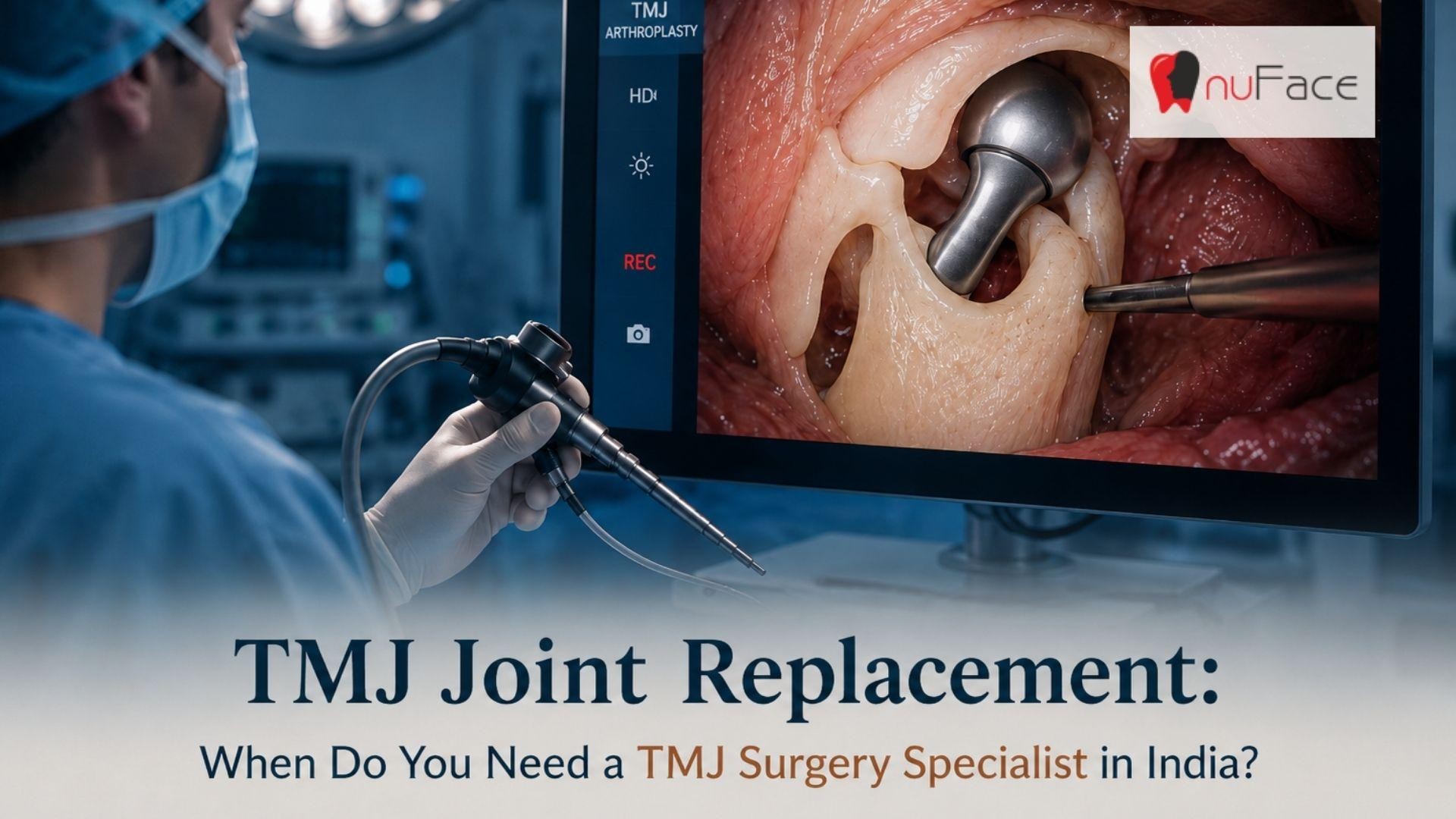
TMJ joint replacement means removing a badly damaged jaw joint and fitting an artificial one in its place. Total joint replacement, or TJR, is the technical term. The goal is straightforward: get the jaw moving properly and take the pain away. I turn to it once the joint is damaged to a point where something like arthroscopy just won’t help anymore.
What Conditions Make Joint Replacement Necessary?
Most patients who reach this point have one or more of the following:
- Severe joint degeneration from long-standing arthritis
- TMJ ankylosis, where the jaw joint has fused and stopped moving
- A joint that failed to improve after previous surgeries
- Trauma that destroyed the joint structure
- A tumour or growth that required removing part of the joint
None of these are common first-visit findings. They usually show up after months or years of a jaw that kept getting worse despite treatment.
The Treatment Ladder: From Conservative Care to Joint Replacement
A TMJ arthroscopy specialist in India doesn’t jump straight to replacement. Each option below is tried and ruled out before moving to the next.
| Stage | What it involves | When we move past it |
| Conservative care | Night guard, physiotherapy, medication | Symptoms don’t improve after 2–3 months. |
| TMJ arthroscopy | Minimally invasive joint cleanup via keyhole incision | The joint structure is intact but damaged inside. |
| Open joint surgery | Direct surgical repair of the joint | Damage is too extensive for arthroscopy alone. |
| Total joint replacement | The prosthesis replaces the joint entirely. | The joint structure itself has failed or fused. |
Types of TMJ Joint Replacement: Stock vs Custom Prosthesis
There are two main approaches. A stock prosthesis is a manufactured, standard-sized implant, suitable for many patients and available faster. A custom prosthesis is designed from a CT scan of the patient’s own anatomy and built specifically for joints with unusual shapes or extensive prior surgery.
An experienced TMJ surgery specialist in India decides between the two based on how much of the original joint anatomy remains and how the replacement needs to align with the patient’s existing bite.
Myths vs Facts About TMJ Joint Replacement
Myth: Joint replacement means you’ll never move your jaw normally again.
Fact: Restoring function, including chewing and speech, is the actual goal of the procedure.
Myth: It’s only for elderly patients.
Fact: Younger patients with ankylosis or severe trauma are common candidates too.
Myth: If one surgery already failed, nothing else can be done.
Fact: Replacement is specifically designed for joints where prior treatment didn’t hold.
Myth: Recovery takes as long as a hip replacement.
Fact: Jaw joint recovery timelines are shorter, guided by physiotherapy rather than months of limited mobility.
Recovery After TMJ Joint Replacement Surgery
The first one to two weeks focus on managing swelling and easing back into a soft diet. Jaw physiotherapy typically starts within the first week to prevent stiffness, since the joint needs movement to heal well, not prolonged rest.
Most patients see steady improvement in jaw opening and comfort over six to twelve weeks, though full functional recovery depends on how damaged the joint was before surgery. Patients whose jaw alignment was affected by years of joint dysfunction sometimes need a follow-up conversation with a TMJ surgery specialist in India about correcting the bite once the joint itself has healed.
When to See a TMJ Specialist?
If you’ve already tried conservative treatment, or even a previous surgery, and your jaw still won’t open properly or the pain hasn’t let up, that’s exactly the situation this procedure exists for.
At NuFace, we evaluate the joint with imaging before recommending anything, including whether jaw correction surgery in India needs to happen alongside or after joint replacement. Book a consultation so we can see what’s actually left of your joint and what will help.
Frequently Asked Questions
How do I know if I need joint replacement instead of arthroscopy?
Arthroscopy works when the joint structure is still largely intact. Replacement becomes necessary when the joint has fused, collapsed, or failed to recover after previous surgery, something only an in-person evaluation and imaging can confirm.
Is TMJ joint replacement a major surgery?
Yes, it’s a significant procedure done under general anaesthesia, typically requiring a short hospital stay. It’s reserved for cases where less invasive treatments have already been tried and haven’t worked.
Will I be able to eat normally after TMJ joint replacement?
Most patients return to a normal diet gradually as swelling settles and physiotherapy progresses. Your surgeon will guide the pace based on how your specific joint responds.
How long does a TMJ prosthesis last?
Modern TMJ prostheses are designed for long-term use, similar in principle to hip and knee implants, though individual durability depends on the patient’s jaw use and overall joint health.
Can TMJ joint replacement be done on both sides at once?
Yes, when both joints are affected, though whether to do both together or stage them depends on the patient’s overall health and how extensive the surgery on each side needs to be. That’s a call made after a full evaluation, not before one.