 NuFace Hospital on March 8, 2026.
You don’t think about your chewing or biting until something feels different. Maybe your front teeth don’t touch when you chew a sandwich. Maybe your lower jaw sticks out in photos no matter how you angle your face. Or maybe your dentist keeps mentioning your “overbite” in that polite but slightly concerned tone. Dr. Nehal Patel, a well known TMJ specialist in India says that jaw alignment problems are more common than people realize, and they’re not just about appearance. They can affect how you eat, speak, breathe, and even sleep.
So when is it just a quirk of your smile, and when does it cross into surgical territory?
What These Bite Problems Actually Feel Like
Let’s start with the lived experiences.
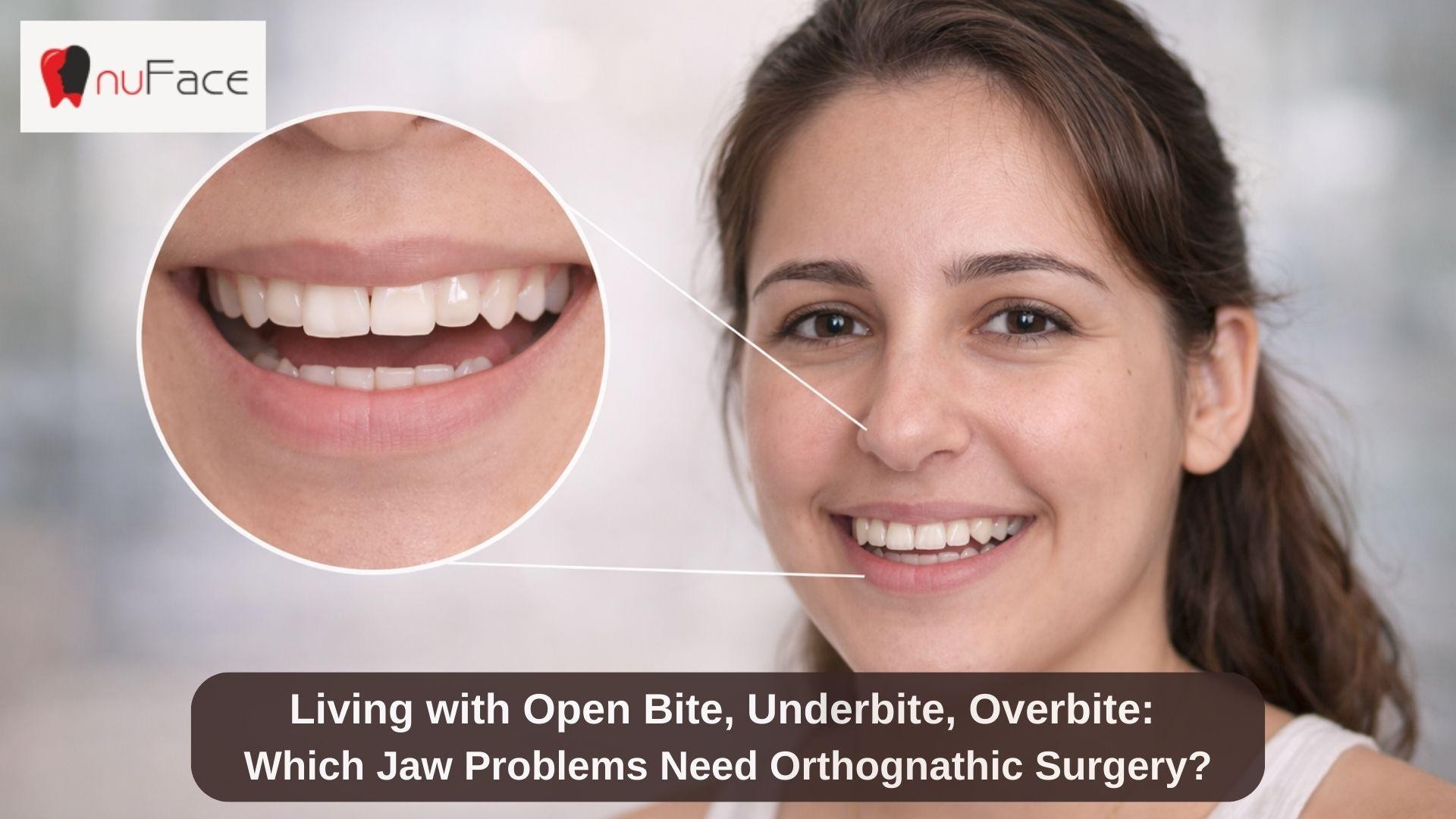
An open bite often shows up as a weird gap between your upper and lower front teeth. You bite down and… nothing meets. Chewing pizza becomes a strategic operation involving your back teeth only. Some people develop a slight lisp because air escapes where teeth should be.
An underbite is harder to hide. The lower jaw sits forward, sometimes giving the face a strong or protruding look. Functionally, it can make biting into foods awkward. Apples, burgers, anything thick becomes a challenge. Jaw strain is common too, especially by the end of the day.
Overbite is the one people dismiss because it’s so common. Dr Nehal Patel, a jaw surgery specialist in India, explains that a deep overbite, where the upper teeth significantly cover the lower ones, can cause real issues. Think worn enamel, jaw pain, or teeth that actually hit the roof of the mouth. Not exactly comfortable.
When Braces Alone Aren’t Enough
Here’s where things get tricky. Many bite issues can be treated with orthodontics, especially if caught early. Braces or aligners can move teeth into better positions. For mild to moderate cases, that’s often all you need.
But teeth sit in bone. If the upper and lower jaws themselves are mismatched in size or position, moving teeth alone is like rearranging furniture in a crooked house. It may look better, but the structure hasn’t changed.
According to jaw specialists, adults run into this more often because jaw growth is already complete. If the discrepancy is skeletal rather than dental, orthodontists may recommend orthognathic surgery to reposition the jaws themselves.
Signs the Problem Is More Than Cosmetic
A lot of people worry they’re being vain for considering surgery. In reality, functional problems are usually the deciding factor.
Do you struggle to chew efficiently? Take unusually small bites? Avoid certain foods because they’re too hard to manage? That’s a clue.
Chronic jaw pain, clicking, or fatigue is another. Your jaw joints work overtime trying to compensate for poor alignment. Some people wake up with sore facial muscles as if they’ve been clenching all night.
Speech issues can also point to a structural problem, especially with open bites. And then there’s breathing. Severe jaw misalignment can narrow the airway, contributing to mouth breathing or sleep apnoea. That’s not just inconvenient. It affects overall health.
What Orthognathic Surgery Actually Does
The word sounds intimidating, but the goal is straightforward: move the jaws into a position where they function properly together.
Jaw surgery specialists in India use specialized techniques that cut and reposition sections of the upper jaw, lower jaw, or both, then secure them with small plates and screws. It’s done under general anaesthesia, and most of the work happens inside the mouth, so visible scarring is minimal.
Recovery isn’t instant. Expect swelling, a soft diet, and a few weeks of taking it easy. Most patients say the discomfort is manageable, though the adjustment to a new bite can feel strange at first. Imagine your teeth suddenly meeting in places they never have before. Your brain needs time to recalibrate.
Is It Worth It?
This is the question everyone quietly asks.
For people with severe discrepancies, the improvement can be life changing. Chewing becomes effortless instead of exhausting. Jaw pain often disappears. Speech may sound clearer. Even facial balance changes in subtle but noticeable ways.
That said, surgery isn’t a casual decision. It requires planning, orthodontic treatment before and after, and patience. If your issues are mild and mostly aesthetic, many clinicians will suggest less invasive options first.
Knowing When to Seek a Specialist Opinion
If your bite interferes with daily life, not just selfies, it’s worth consulting a maxillofacial surgeon for a jaw correction surgery in India. You don’t have to decide anything on the spot. A proper evaluation includes scans, measurements, and a discussion of options.
Sometimes the answer is reassuring. Braces will do the job. Other times, you’ll learn that surgery could prevent years of discomfort down the line.
Living with an open bite, underbite, or overbite isn’t just about how your smile looks. It’s about how your jaw works every single day, from your first sip of coffee to your last yawn at night. If something feels persistently wrong, it probably is. And thankfully, modern treatment can do far more than most people expect.