 NuFace Hospital on February 3, 2026.
Jaw pain is sly. One day it is a dull ache near your ear. Another day your jaw clicks when you chew an apple. Then there are mornings when opening your mouth feels stiff, like something is stuck and does not want to move. If this sounds familiar, the issue might not be your muscles at all. It could be the disc inside your jaw joint.
Dr Nehal Patel, a well-known TMJ specialist in India, explains this condition as TMJ internal derangement, and despite the intimidating name, doesn’t need to be feared. Read on to find out our tips on how to tackle TMJ internal derangement.
What Is TMJ Internal Derangement?
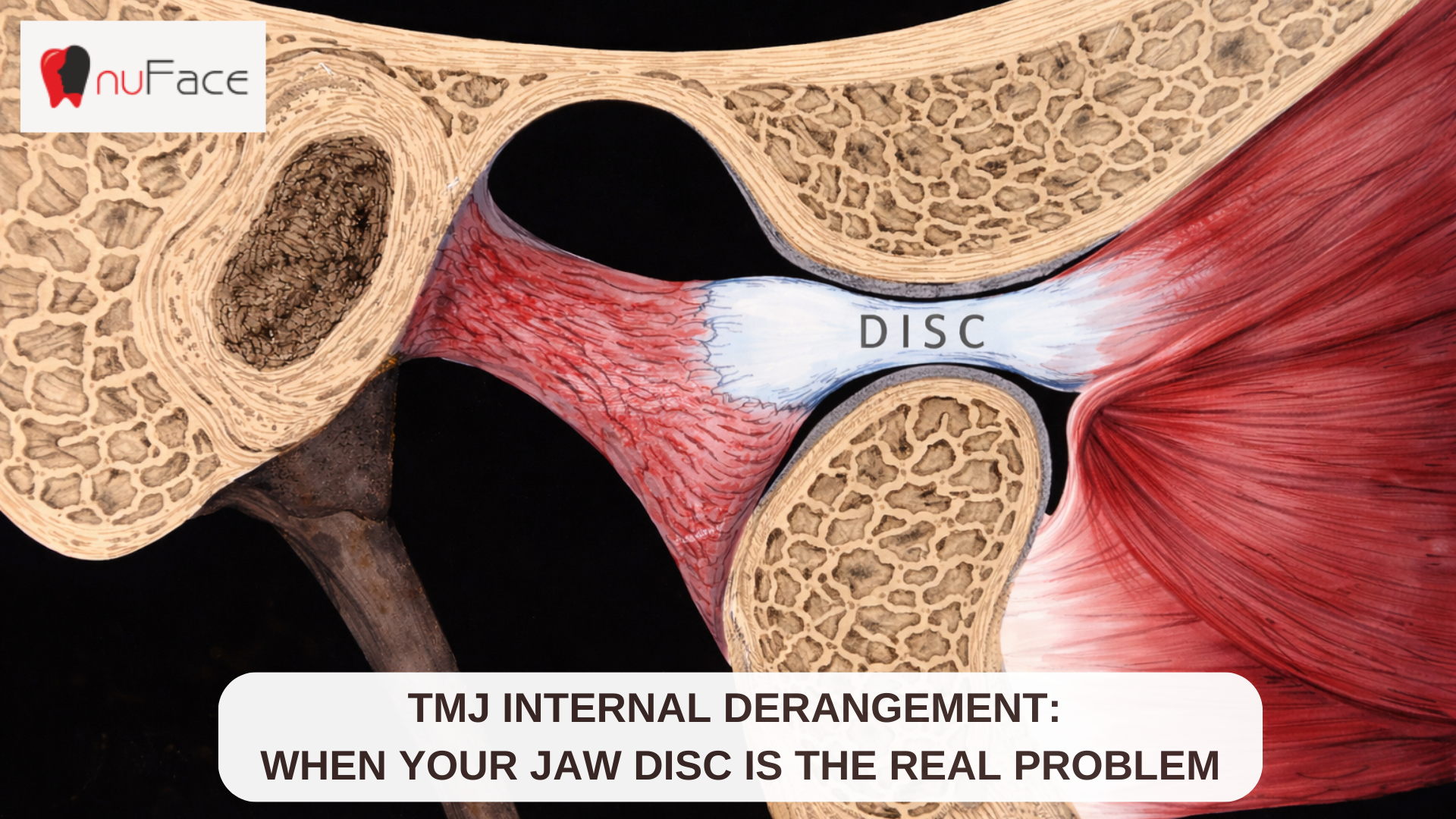
Your jaw joint has a small disc made of cartilage. Think of it like a cushion that helps the jaw glide smoothly when you talk, chew, or yawn. In a healthy joint, that disc stays in the right place. With internal derangement, it does not.
The disc may slip forward, twist slightly, or stop moving the way it should. When that happens, the joint mechanics change. Instead of smooth motion, you get friction, noise, and discomfort. Sometimes the disc pops back into place with a click. Other times it stays out of position and causes ongoing pain.
People often assume jaw pain means tension or stress. But listening to the expert themself, the TMJ arthroscopy specialists in India, like Dr Nehal Patel at NuFace Maxillofacial & Dental Hospital in Surat, say that while stress can play a role, internal derangement is more structural. Something is physically off inside the joint.
Signs That Point to the Disc
One of the most common clues is sound. Clicking, popping, or snapping when you open or close your mouth is a classic sign. It might not hurt at first, which is why many people ignore it.
Then there is the feeling of catching. You open your mouth and it hesitates for a second, like a sticky drawer. Some people notice their jaw shifting slightly to one side when they open wide. Others feel pressure deep near the ear, especially when chewing tough food.
Pain can come and go. TMJ surgery specialists in India say that it can show up as a dull ache, sharp twinges, or even headaches that seem to start near the temples. Ear symptoms are common too. Ringing, fullness, or the feeling of an ear infection without any infection at all.
Why It Happens in the First Place
There is rarely one single cause. Jaw trauma is a big one. A fall, a blow to the face, or even a difficult dental procedure can disturb the disc.
Teeth grinding and clenching also matter. Constant pressure on the joint can slowly push the disc out of position. Poor posture plays a role as well. When the head juts forward all day, the jaw joint takes extra strain.
Sometimes it is just anatomy. Some joints are more prone to instability, especially in people with connective tissue issues or very flexible joints.
How It Is Diagnosed
A proper diagnosis matters here. Many jaw problems feel similar, but the treatments are not the same.
We advise you to consult a dentist or TMJ specialist or a jaw surgery specialist in India. They will usually start with a physical exam. They listen to the joint, feel how it moves, and ask about your symptoms. Imaging is often needed to confirm disc issues. An MRI is the gold standard because it shows soft tissue, including the disc itself.
Without imaging, internal derangement can be missed or mistaken for muscle pain.
What Treatment Actually Looks Like
The good news is that surgery is rarely the first step. Most cases improve with conservative care.
This might include wearing a custom oral appliance at night to reduce pressure on the joint. Physical therapy can help retrain jaw movement and relax surrounding muscles. Simple changes like avoiding gum, cutting food into smaller pieces, and being mindful of clenching make a difference.
Anti inflammatory medication can calm flare ups. Heat or ice can help too, depending on what feels better for you.
In more stubborn cases, injections or minimally invasive procedures may be considered. Full surgery is usually reserved for severe cases where the disc is badly damaged and other options have failed.
Why Ignoring It Is a Bad Idea
A clicking jaw that does not hurt can still be a problem. Over time, a displaced disc can lead to inflammation, joint damage, and arthritis changes. What starts as noise can turn into pain and limited movement.
Catching it early gives you more options and better outcomes. Waiting until the jaw locks or pain becomes constant makes treatment harder.
The Takeaway
TMJ internal derangement is not just jaw pain you have to live with. It is a mechanical issue, and mechanical issues can often be managed once they are properly identified.
If your jaw makes noise, feels unstable, or hurts in ways that do not make sense, trust that signal and make it a point to visit a jaw correction specialist in India. The disc inside your joint might be asking for attention. And listening sooner rather than later can save you a lot of discomfort down the road.