
 Dr Nehal Patel on April 24, 2026.
TMJ internal derangement is treated by oral and maxillofacial surgeons step by step, starting with medications, splints, a soft diet, and therapy. Surgery is only considered when pain, locking, or jaw dysfunction doesn’t go away with these less invasive treatments.
Most people don’t even know what TMJ is until something goes wrong with it, says Dr. Nehal Patel, a TMJ surgery specialist in India at Nuface Maxillofacial & Dental Hospital in Surat. And then, all of a sudden, the temporomandibular joint is the most important thing in life. It’s easy to take simple things for granted if you’ve never had jaw pain. Eating toast. Yawning without thinking. Laughing out loud at something silly. When you have TMJ internal derangement, even normal times can feel dangerous. Will the jaw make a noise? Lock? Do you feel that sharp pain in your ear again?
What Does It Feel Like to Have TMJ Internal Derangement?
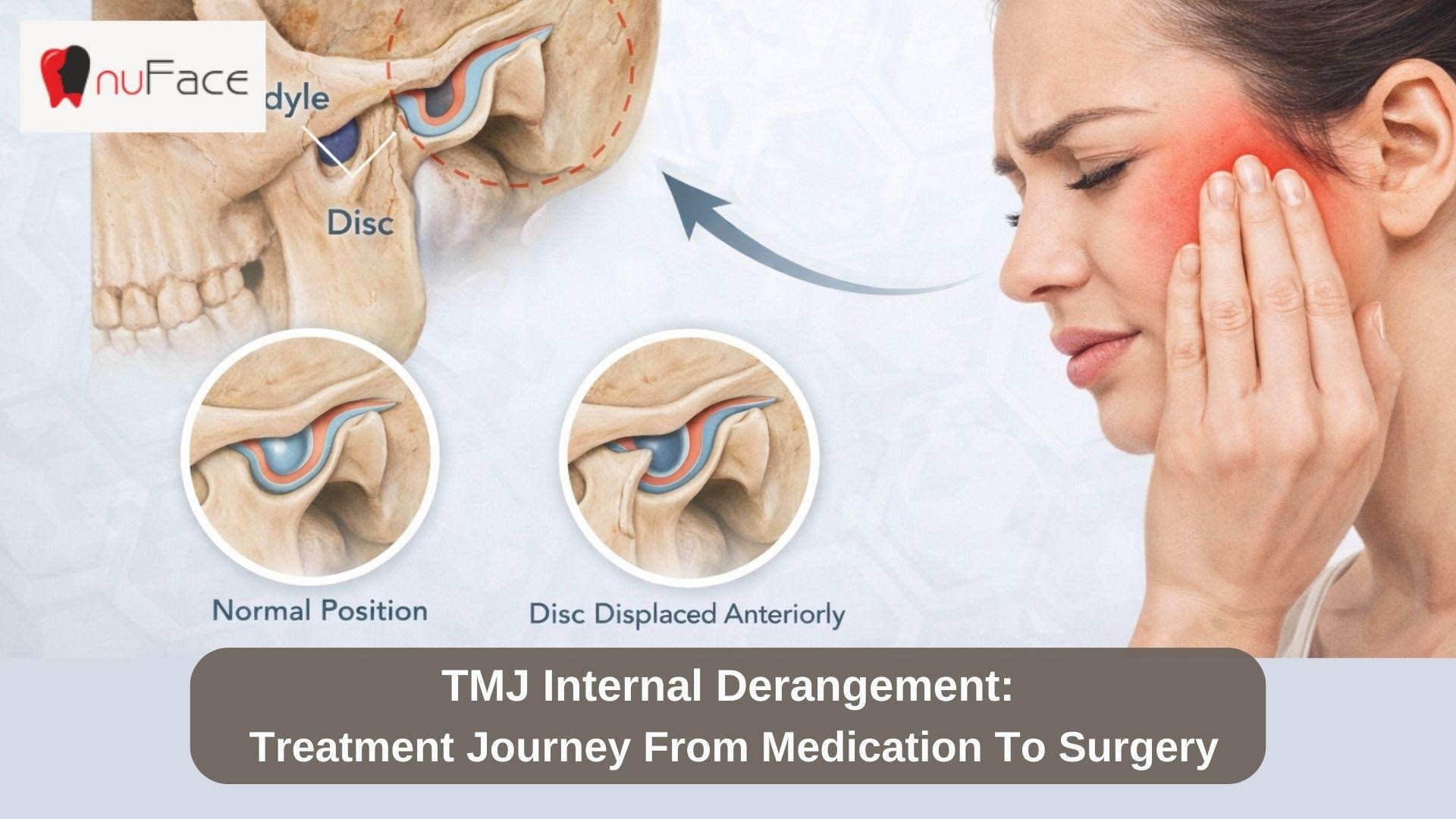
This condition usually means that the disc that cushions the jaw joint has moved out of its normal position. That small change can cause a lot of trouble. TMJ specialists in India say that clicking, popping, grinding sounds, pain that spreads to the temple or neck, or a feeling that your bite is off, like your teeth don’t meet the way they used to, are all signs of internal TMJ derangement.
The mornings can be the worst. It feels like the jaw is stiff and rusty, like it needs to be warmed up before it will work. Some people can only open their mouths halfway. Some people feel a sudden catch, as if the joint is unsure of itself before sliding into place. When you eat something chewy, like a bagel or caramel, it stops being fun and starts to feel like a test of strength.
What is the first thing you should do for TMJ internal derangement?
As explained by Nehal Patel, an experienced TMJ arthroscopic surgery specialist in India at Nuface Maxillofacial & Dental Hospital in Surat, surgeons don’t usually go straight to surgery. Usually, the first thing to do is take medicine and make small changes to your habits. Anti-inflammatory drugs can help reduce swelling in the joint. Muscle relaxants might help if you grind or clench your teeth, especially when you sleep.
Using heat packs becomes a small daily habit. That gentle warmth along the jaw can be surprisingly soothing. It can help relax the tight muscles that pull on the joint. When the area feels sore or inflamed, some people switch between hot and cold packs.
Diets that include soft foods are also important. Think about soups, yoghurt, pasta, and scrambled eggs. Not exciting, but good for your jaw. You start to notice how many foods you have to chew a lot. Apples, nuts, crusty bread, and even steak all of a sudden seem like bad choices.
Do splints, physical therapy, and changing habits really help?
A dentist may suggest a splint or night guard if symptoms don’t go away. It looks a little like a retainer and goes between the teeth to ease the pressure on the joint. It can make a big difference for people who grind their teeth at night. It’s a small win to wake up without that deep, dull pain in your jaw.
A lot of people are surprised when they have to go to physical therapy. Gentle exercises can help you learn how to move your jaw again. Therapists might massage tight muscles in the neck or inside the cheek. It sounds painful, and it can be, but the relief can come right away.
Then there’s the behaviour part. TMJ specialists in India say that you should be aware of habits like clenching your teeth when you’re stressed, resting your chin on your hand, or chewing gum all the time. These seem safe until you realise how much stress they put on a joint that is already hurting.
When is conservative TMJ treatment not enough?
For some people, their symptoms get better over time. For some people, the pain doesn’t go away or the jaw keeps locking. That’s when doctors might suggest more advanced options, like injections or procedures that don’t require a lot of cutting. Steroid shots can help with swelling. Sometimes, Botox is used to calm down jaw muscles that are too active.
If imaging shows that the discs have moved a lot or the joints are damaged, surgery is an option. No one makes this choice lightly. It seems scary to think about working close to the face. But when pain every day makes it hard to eat, talk, or sleep, the risk may start to seem worth it.
What kinds of surgery are available for TMJ internal derangement?
Dr. Nehal Patel, one of India’s most experienced TMJ arthroscopy specialists in India, says that procedures can be as simple as arthroscopy, which uses small tools inserted through small cuts, or as complicated as open joint surgery. Arthroscopy can move the disc or take out inflamed tissue, and the recovery time is usually short. Open surgery is more complicated, but it may be necessary if the structural problems are very bad.
How does recovery go after TMJ surgery?
It takes time to heal. There may be swelling, pain, and a time when the jaw can’t move as freely. Soft foods are back. Too much talking can make the joint tired and sore. But a lot of patients see something good happen pretty quickly. The pain that never stops starts to go away. The jaw moves more easily. That feeling of not knowing what will happen next starts to go away.
Can you go back to living normally after TMJ treatment?
Most people still need to be more careful with their TMJ and their jaw. Stress management suddenly seems less like a choice and more like something that needs to be done for the joint. The path from taking medicine to possibly having surgery is not always clear. Some weeks are good, and some are bad. But things can get better, and a lot of people do get their comfortable, functional movement back.
If your jaw pain doesn’t go away or gets worse, getting checked out early can save you years of unnecessary pain. You also realise how much better life is when that little joint finally works the way it should.
FAQs
1. What does it mean to have TMJ internal derangement?
TMJ internal derangement is a problem with the temporomandibular joint that causes the disc inside to move out of its normal position. This can cause pain in the jaw, clicking sounds, trouble opening the mouth, locking, and pain when chewing or talking.
2. What is the first thing you should do to treat TMJ internal derangement?
The first treatment for TMJ internal derangement usually includes medications, heat or cold therapy, a diet of soft foods, splints or night guards, physical therapy, and changing bad habits. Before thinking about surgery, doctors usually try less invasive treatments first.
3. When is surgery necessary for TMJ internal derangement?
If TMJ pain, locking, limited jaw movement, or joint damage doesn’t go away with medication, splints, therapy, or other non-surgical treatments, surgery may be necessary. Imaging and a clinical evaluation help figure out what to do next.
4. Is it possible for TMJ internal derangement to heal on its own?
Yes, many people with TMJ internal derangement get better without surgery. Many patients feel a lot better when they take the right mix of medications, rest their jaws, get splint therapy, do physical therapy, and learn how to deal with stress.
5. How does it feel to recover after TMJ surgery?
After TMJ surgery, you may have swelling, pain, limited jaw movement for a short time, and have to eat soft foods for a while. But as healing goes on, many patients start to notice that their jaw moves more smoothly, hurts less, and locks up less often.
Reference
Internal Derangements of the Temporomandibular Joint – Oral and Maxillofacial Surgery for the Clinician, Association of Oral and Maxillofacial Surgeons of India (AOMSI), Springer (open access).