
 NuFace Hospital on August 2, 2026.
TMJ Arthroscopy is usually needed when jaw pain, clicking, locking, stiffness, or limited mouth opening does not improve with simple treatments. In such cases, TMJ Specialists in India may recommend this minimally invasive procedure to diagnose and treat internal derangement of the jaw joint. Jaw pain can make everyday activities like eating, talking, or even yawning uncomfortable. While occasional jaw discomfort may settle on its own, frequent or persistent pain could be related to a condition called TMJ disorder.
The temporomandibular joint connects your jaw to the skull and works like a sliding hinge, helping you open and close your mouth smoothly. When this joint does not move properly, it can cause symptoms such as pain, clicking sounds, jaw stiffness, or difficulty opening the mouth. One of the common causes is internal derangement, where the small disc inside the jaw joint moves out of its normal position. In many cases, the condition can be managed with simple therapies, medicines, splints, or physiotherapy. But when symptoms continue or daily jaw movement becomes difficult, a TMJ arthroscopy specialist in India may suggest TMJ Arthroscopy as a minimally invasive treatment option.
Understanding the TMJ joint
The TMJ joint is located just in front of each ear. It allows the jaw to move in several directions so that you can chew and yawn comfortably. Inside the joint is a small cartilage disk that works like a cushion between your bones. The disk helps the joint move smoothly and prevents friction. But sometimes the disk shifts out of place or becomes damaged. When this happens, your joint might not function really well, leading to pain and limited movement.
What is TMJ internal derangement?
Internal derangement refers to the abnormal position or movement of the disc inside the joint. It can interfere with the normal mechanics of your jaw joint.
What are the signs of internal derangement?
- Clicking or popping sounds when opening the mouth
- Jaw pain near the ear
- Difficulty opening the mouth fully
- Jaw locking or getting stuck
- Stiffness in the jaw joint
- Pain while chewing
Causes of TMJ internal derangement
Trauma to your jaw or face can damage your joint or even displace the disk. Constant grinding or clenching puts pressure on your jaw joint and might impact disc position. Stress and muscle tension often lead to jaw clenching, which increases strain on your joint.
When do you need to go for TMJ arthroscopy?
Most disorders are first treated with non-surgical treatments. These might include medications and physiotherapy. But if symptoms do not improve after several months, a TMJ surgery specialist in India might recommend Arthroscopy.
TMJ arthroscopy is usually considered when:
- Jaw pain continues despite conservative treatment.
- The jaw frequently locks or becomes stuck.
- Mouth opening becomes limited.
- There is persistent clicking with pain.
- Imaging tests show disc displacement or joint damage.
What Is TMJ Arthroscopy?
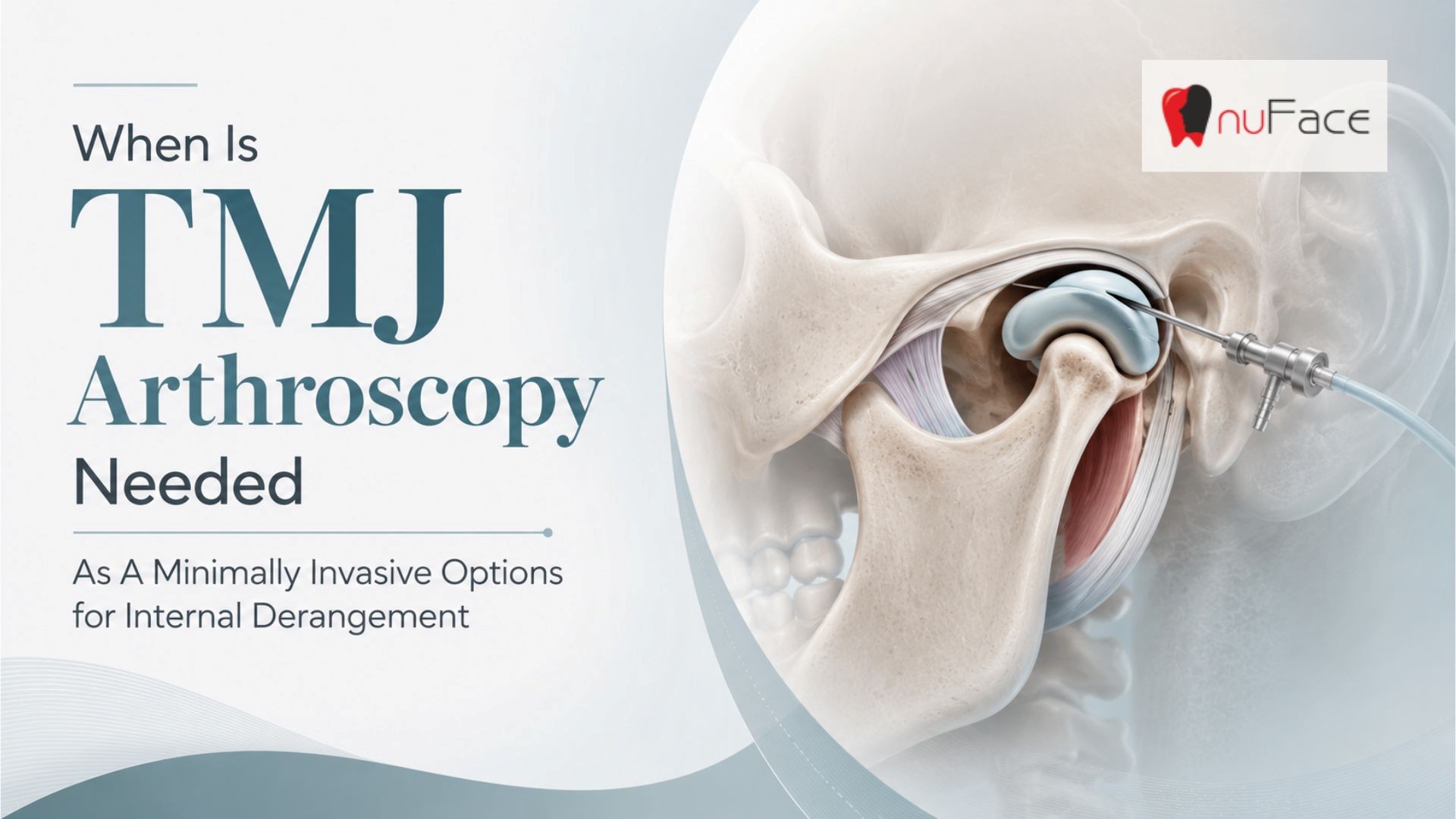
Arthroscopy is basically a minimally invasive surgical procedure used to diagnose and treat problems inside your jaw joint. Instead of making a large incision, the surgeon inserts a small instrument called an arthroscope into your joint through a tiny incision near the ear. The arthroscope contains a small camera and light. This allows your surgeon to see the inside of your joint on a screen and identify exact problems. Special instruments can then be used through another small opening to treat your condition. Because the incisions are very small, it results in less pain and faster healing.
How does Arthroscopy treat internal rearrangement?
Inflammatory tissue inside your joint can cause pain and even restrict movement. Arthroscopy allows the surgeon to remove or remove inflamed tissue. If your disc has moved out of place, the surgeon might be able to guide it back into a better position so the joint moves more smoothly.
Recovery After TMJ Arthroscopy
Recovery from TMJ arthroscopy surgery is generally quicker than open jaw surgery.
Most patients can go home the same day.
Common recovery experiences include:
- Mild swelling near the ear
- Temporary jaw stiffness
- Minor discomfort for a few days
Doctors may recommend:
- Soft foods for a short period
- Jaw exercises or physiotherapy
- Anti-inflammatory medications
What Happens During The Procedure?
TMJ Arthroscopies are usually performed in a hospital or surgical centre. The experts give general anaesthesia or sedation a small incision is made near the ear, and the arthroscope is inserted into the joint space. The surgeon examines the joint using the camera, and the small instruments are used to treat the problem. For this type of procedure, it usually takes around 30 minutes to one hour, depending on the complexity of the problem.
Success Rate of TMJ Arthroscopy
TMJ arthroscopy has shown positive outcomes for many patients with internal derangement, says Dr Nehal Patel, TMJ arthroscopy specialist in India.
Studies indicate that a large number of patients experience:
- Reduced jaw pain
- Improved mouth opening
- Better jaw function
- Less clicking or locking.
So, in short, you can say that TMJ disorders can greatly impact comfort and quality of your life. Simple activities like chewing or speaking might become painful when the jaw joint is not functioning well. For many people with internal rearrangement, conservative treatments like medication or physiotherapy are enough to manage symptoms.
Reference
Internal Derangements of the Temporomandibular Joint – Oral and Maxillofacial Surgery for the Clinician, Association of Oral and Maxillofacial Surgeons of India (AOMSI), Springer (open access).