
 Dr Nehal Patel on September 22, 2026.
Why does my jaw click every time I chew?” I hear a version of this question almost every week, usually from someone who has already spent months on painkillers, a soft diet, and a mouth guard that isn’t helping. Some have searched their symptoms online for weeks before booking a consultation with a TMJ arthroscopy specialist in India. Most don’t know that a jaw joint problem can sometimes be fixed with an advanced procedure like a keyhole surgery similar to the one on your other joints.
What Is TMJ Arthroscopy?
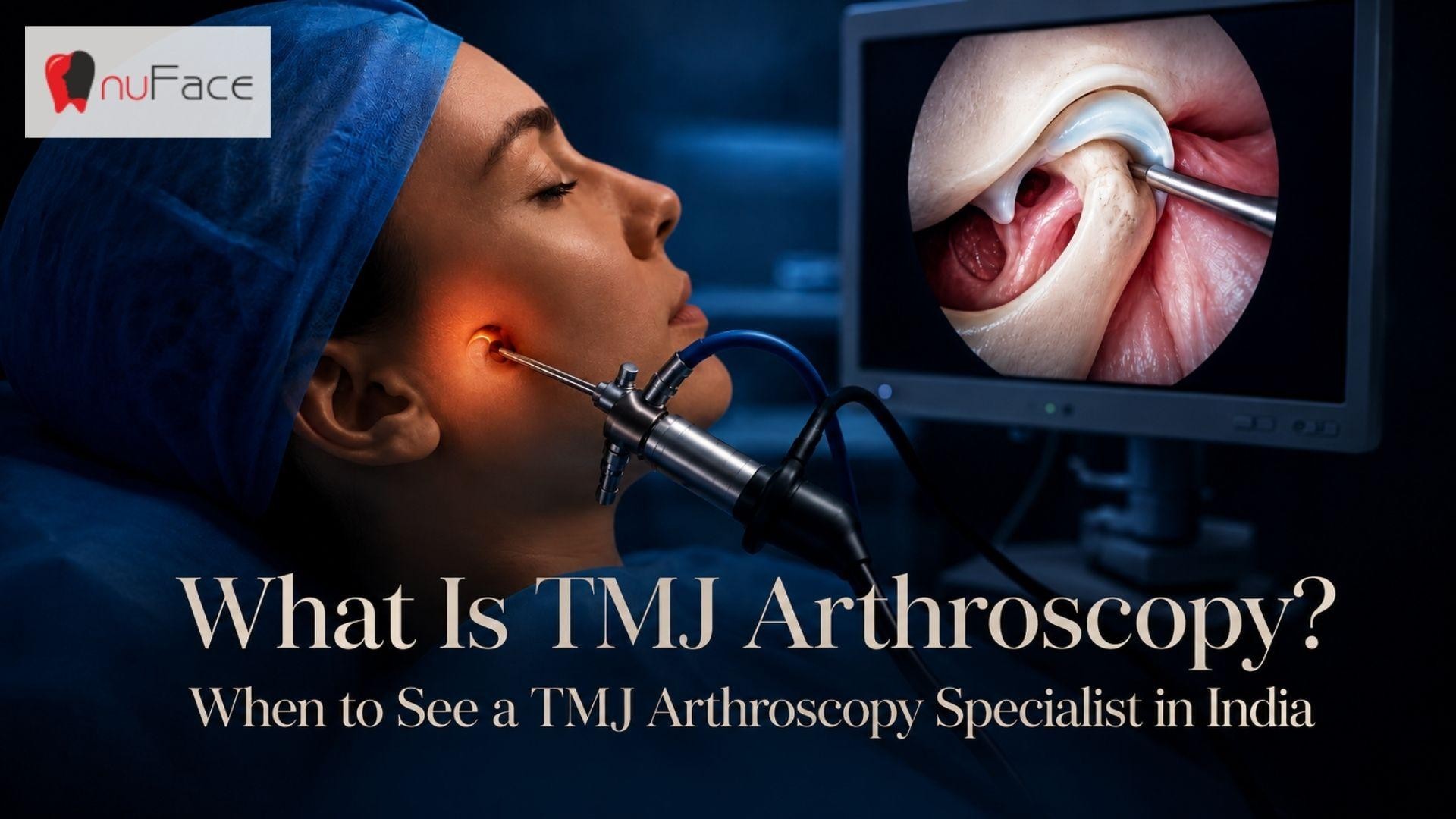
TMJ arthroscopy is a minimally invasive procedure to examine and treat the temporomandibular joint, the hinge connecting your jawbone to your skull, just in front of each ear. A surgeon inserts a thin camera (arthroscope) through a small incision to look directly inside the joint and treat problems such as inflammation, scar tissue, or a displaced disc, without opening the area as older jaw surgeries did.
The temporomandibular joint moves every time you talk, chew, or yawn. When something inside it wears down or shifts out of place, that constant motion turns into constant irritation.
What Causes TMJ Disorders in the First Place?
Most people I see didn’t injure their jaw in an obvious accident. The joint wears down gradually, often from a combination of factors:
- Teeth grinding or clenching, especially during sleep
- Chronic stress that shows up as jaw tension
- Arthritis affecting the joint, similar to what happens in knees or hips
- A previous jaw injury or dislocation that never fully healed
- Structural misalignment between the upper and lower jaw
Women between 20 and 40 report TMJ symptoms more often than any other group, based on data reviewed in the Journal of Oral Rehabilitation. That doesn’t mean men or older patients are exempt; it just shifts who tends to walk into a TMJ specialist in India’s clinic first.
Non-Surgical Care vs Surgery: Where Arthroscopy Fits
Arthroscopy is not the first option. It’s what a TMJ surgery specialist in India turns to after simpler options stop working.
| Approach | What it involves | When it’s used |
| Conservative care | Night guard, physiotherapy, anti-inflammatory medication | First 2–3 months for most patients |
| TMJ arthroscopy | Small camera + instruments through a keyhole incision | Persistent locking, pain, or limited opening after conservative care fails |
| Open joint surgery | Full surgical access to the joint | Severe structural damage, tumours, or major degeneration |
Most people never need to move past the first row of that table. Arthroscopy sits in the middle for a jaw that’s genuinely stuck, not just sore.
What Happens During the Procedure for TMJ Arthroscopy?
A patient under general anaesthesia has a small incision made near the ear, through which the arthroscope and fine instruments are guided into the joint space. Depending on what’s found, we can smooth scar tissue, reposition a displaced disc, or flush out inflammatory fluid, all through that same small opening.
The joint space being worked in is only a few millimetres wide, which is exactly why the equipment has to be this precise and why the incision can stay this small.
The whole procedure typically takes 30 to 90 minutes, and most patients go home the same day or the next morning.
Myths vs Facts About TMJ Surgery
Myth: Any jaw clicking means you need surgery.
Fact: Clicking alone, without pain or locking, often needs no treatment at all.
Myth: TMJ arthroscopy is as invasive as full jaw surgery.
Fact: It uses a keyhole incision, not the wide opening open surgery requires.
Myth: Recovery takes months.
Fact: The American Association of Oral and Maxillofacial Surgeons notes most patients resume normal activities within a week.
Myth: TMJ pain will just go away on its own.
Fact: Untreated joint damage can progress and narrow your future treatment options.
Recovery: What to Expect After TMJ Arthroscopy
Mild swelling and jaw soreness for a few days is normal. I ask patients to stick to a soft diet for about a week and start light jaw exercises soon after to keep the joint from stiffening.
Full recovery, such as comfortable chewing and a normal range of motion, usually falls between one and three weeks, depending on how much work was done inside the joint. Patients with a more complex underlying jaw alignment issue sometimes need a follow-up conversation with a jaw surgery specialist in India if the joint problem is connected to a bigger structural mismatch between the upper and lower jaw.
Frequently Asked Questions
Is TMJ arthroscopy painful?
You’re under general anaesthesia during the procedure itself. Afterwards, most patients report manageable soreness around the ear and jaw for a few days, which is controlled with standard pain medication and a soft diet.
How do I know if I need a TMJ specialist in India instead of just a dentist for my jaw problem?
If jaw pain, locking, or limited opening persists beyond a few weeks despite a night guard or physiotherapy, that’s the point to see a specialist trained specifically in joint disorders, not general dental care.
Will TMJ arthroscopy fix jaw misalignment too?
Arthroscopy treats problems inside the joint itself. If the root issue is how your upper and lower jaw meet, that’s a separate conversation about jaw correction, sometimes involving orthodontic coordination.
How long do the results of TMJ arthroscopy last?
Many patients see lasting relief, though outcomes depend on the underlying cause and whether habits like teeth grinding are also managed. Your surgeon can give you a realistic picture based on your specific joint findings.
Does every clicking jaw need TMJ surgery?
No. Jaw clicking without pain, locking, or restricted movement often does not require surgery. Persistent or worsening symptoms should be evaluated by a TMJ specialist.