
 Dr Nehal Patel on May 17, 2026.
TMJ pain can quietly affect your everyday life in ways you might not expect. Simple things like enjoying your favorite food, talking for a long time, yawning, or even smiling can start to feel uncomfortable. For many people, this discomfort is linked to the temporomandibular joint (TMJ), the joint that connects your lower jaw to your skull and helps your mouth move smoothly. While TMJ-related issues are quite common, not every case is serious. In fact, most people find relief with simple treatments like medication, physiotherapy, or lifestyle changes. However, in some situations, the problem goes beyond basic discomfort. When the joint becomes severely damaged or stops functioning properly, more advanced treatment may be needed. According to Dr. Nehal Patel, a renowned TMJ Specialist in India from Nuface Maxillofacial & Dental Hospital, TMJ joint replacement is usually considered only in severe cases.
Why Is TMJ Important?
The TMJ is one of the most active joints in the body. It helps you:
- Open and close your mouth
- Chew food
- Speak clearly
- Yawn
- Move your jaw side to side
What is TMJ joint replacement?
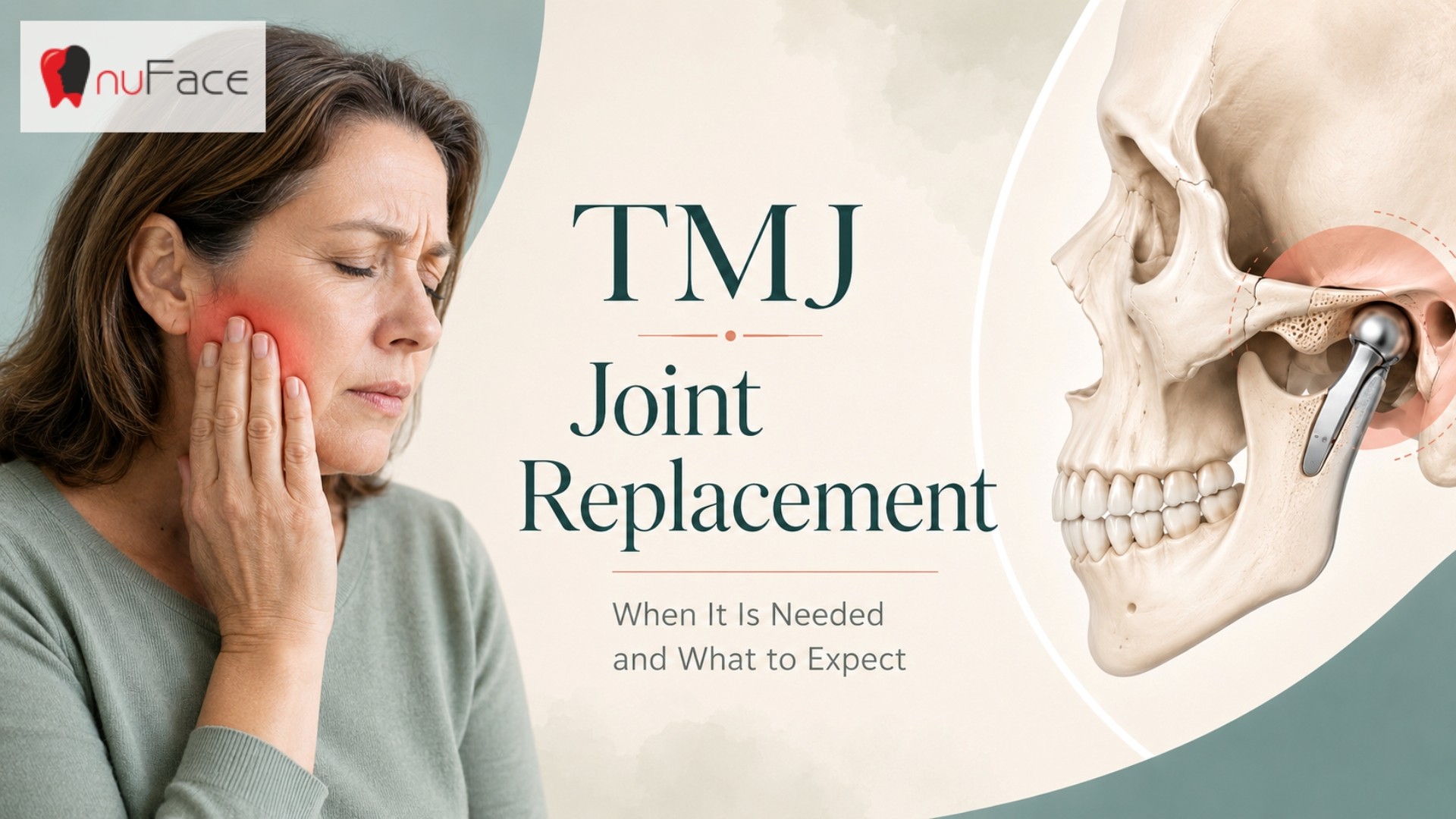
According to Dr. Nehal Patel, one of the most experienced and trusted TMJ Specialist in India, it is a surgery where the damaged jaw joint is removed and replaced with an artificial joint. The artificial joint is usually made from medical grade materials like titanium and special plastic. It is designed to help your jaw move better and reduce pain. The goal of the surgery is to relieve constant pain and improve jaw movement. It helps you eat and speak more comfortably.
Who really needs TMJ joint replacement?
Not everyone with jaw pain needs major surgery. In fact, most people with TMJ problems feel better with simple,non-surgical treatments like medication, physiotherapy, or lifestyle changes. Surgery is only considered when the problem is more serious, and the joint itself is clearly damaged.
According to Dr. Nehal Patel, onee of the most skilled TMJ surgery specialist in India, a TMJ joint replacement is usually recommended only after other treatments have failed and scans show significant damage to the joint. This damage can happen due to conditions like arthritis, injury, or long-term strain on the jaw.
There are some clear signs that the problem may be more than just temporary discomfort. These include:
- Constant or worsening jaw pain
- Grinding, clicking, or cracking sounds while moving the jaw
- Stiffness or difficulty opening and closing the mouth
- Limited jaw movement that affects eating or speaking
In some cases, conditions like osteoarthritis slowly wear down the joint. Over time, this can lead to swelling, loss of cartilage, and even changes in the bone structure. When the joint becomes too damaged to repair, replacing it may help restore smoother movement and reduce pain.
How Doctors Decide If You Need TMJ Replacement
A Jaw surgery specialist in India will carefully assess your condition before recommending surgery.
This may include:
- Detailed medical history
- Physical jaw examination
- X-rays or CT scans
- MRI scans
- Bite and jaw movement checks
What Happens During TMJ Joint Replacement Surgery?
The TMJ replacement surgery is done under general anaesthesia.
During the procedure:
- The damaged joint parts are removed
- The artificial joint components are placed
- The jaw is carefully aligned
- The area is closed with stitches
The surgery can take several hours depending on the complexity.
What does recovery look like?
Recovery from the joint replacement takes time but you might notice steady improvement.
First few days
In the early days after surgery you might have swelling or mild to moderate discomfort. Doctors usually give pain relief medicines or antibiotics if needed.
First few weeks
This is the stage where healing actually happens. You need to eat soft foods and avoid hard chewing. You need to keep your mouth clean and attend follow up visits.
Long-Term Recovery
Full recovery can take a few months.
Over time, many patients notice:
- Less pain
- Better jaw opening
- Easier eating
- Improved speech comfort
- Better sleep
Physiotherapy and regular check-ups can help improve results.
Patience is important because healing happens gradually.
What Are the Risks of TMJ Replacement?
Like any major surgery, TMJ replacement has some risks.
Possible risks include:
- Infection
- Bleeding
- Nerve irritation
- Temporary numbness
- Limited jaw movement during healing
- Rare implant issues
So TMJ joint replacement is not something that most people with job pain will need. But for those with severe joint damage, failed treatments or serious jaw dysfunction it can offer real benefit and better quality of life. The key is getting the right diagnosis and understanding all your treatment options. If jaw pain is impacting your daily life, speaking to a qualified oral specialist can help you decide the best path forward.
FAQs
1. Who needs TMJ joint replacement operation?
If the jaw joint has been severely damaged by arthritis, injury, previous failed surgery, joint fusion, or if the TMJ disorder has not improved with non-surgical treatment over a long period of time, TMJ joint replacement may be necessary.
2. When is TMJ joint replacement advised?
This is generally advised for people with chronic jaw pain, limited ability to open their mouths, difficulty chewing, jaw rigidity or joint damage that impacts on their daily life and cannot be managed with medicines, splints, physiotherapy or minor procedures.
3. Is TMJ joint replacement a big surgery?
Yes, TMJ joint replacement is a major surgery. This involves replacing the damaged jaw joint with an artificial joint, so it should only be planned following detailed diagnosis, scans and specialist evaluation.
4. How does recovery go after TMJ joint replacement?
Recovery generally includes swelling control, a soft diet, pain medications, jaw exercises, and regular check-ups. Most patients will slowly regain their ability to move the jaw and chew comfortably over the course of a few weeks to months, depending on the patient’s condition.
5. Can TMJ joint replacement aid jaw movement and pain?
Yes. In the right patient, if the natural joint is severely damaged, TMJ joint replacement can help with severe joint pain, help open the mouth, help with chewing, and restore jaw function.
Reference
Temporomandibular Joint Ankylosis – Oral and Maxillofacial Surgery for the Clinician, Association of Oral and Maxillofacial Surgeons of India (AOMSI), Springer (open access).